Early Life in India(1933-1942)
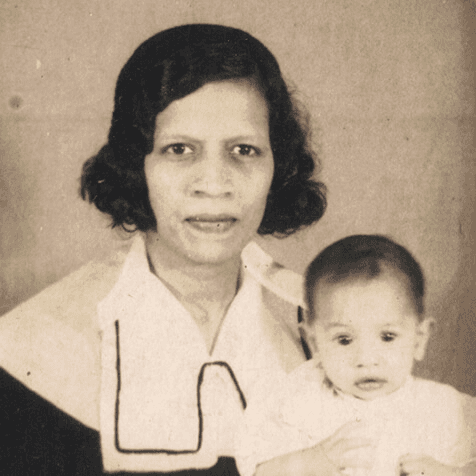
Lancelot Ribeiro (christened Lanceloté José Belarmino Ribeiro), was born in Bombay (now Mumbai). His father, João José Fernando Flores Ribeiro (1902-1988) was a chartered accountant and his mother, Lília Maria Cecília Ribeiro (née Antunes) (1901-1987), a milliner and tailor who had singlehandedly set up The Bombay Women’s Needle Art & Domestic Science Institute in 1925.
Lily had lost her first husband at the age of twenty-three and she would soon suffer the further loss of her two-and-a-half-year-old daughter, Zemira, and then her son contractingsmallpox and on the brink of death. Her son - Ribeiro’s older half-brother - would become the artist F. N. Souza (1924-2002)
It was in January 1933 that Lily remarried to John Ribeiro. Lancelot Ribeiro was born on 28 November 1933, followed by their daughter, Marina Ribeiro (1935-2015), two years later.
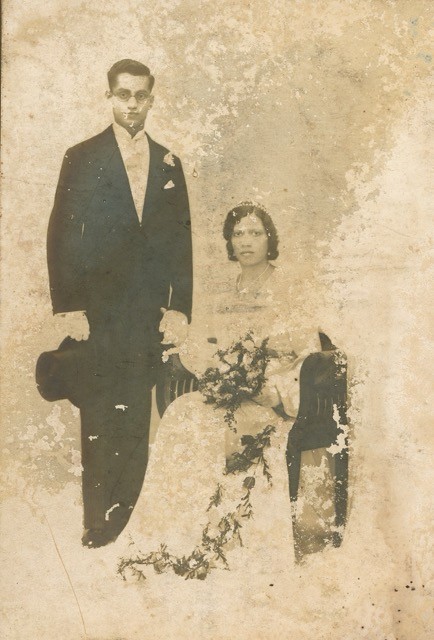 | 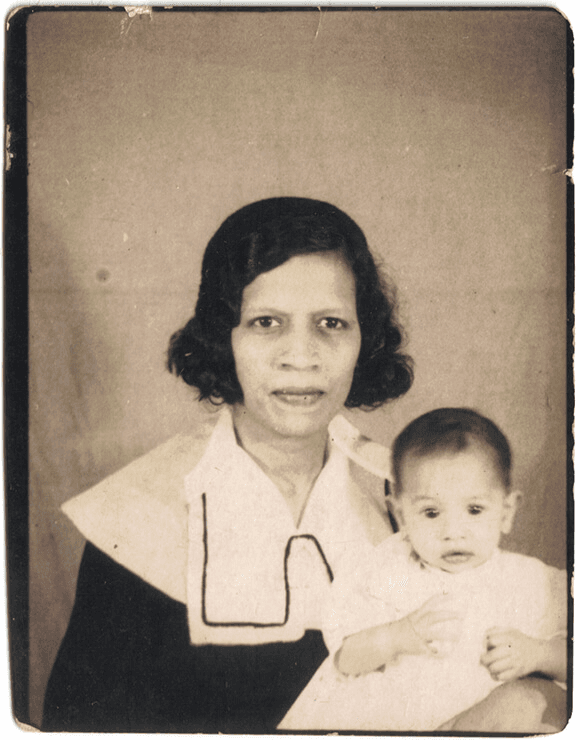 | 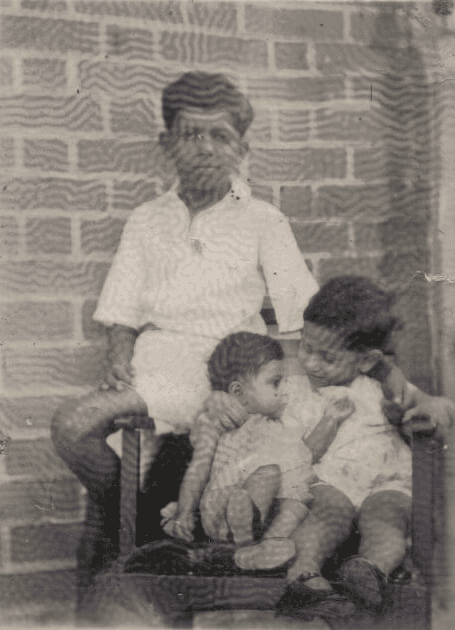 |
John and Lily Ribeiro on their wedding day, January 1933 | Ribeiro and his mother, Lily, 1934 | Souza (standing), Marina and Ribeiro (seated, right), Hira Building, Bombay,1936 |
The family split their time between their home in Hira Building in Bombay and Azossim in Old Goa, where the Ribeiro ancestral home was. Goa, a state on India’s west coast, had been a ‘possession’ of the Portuguese Empire for 400 years. It bore the imprint of the Portuguese presence in its landscape, architecture and Roman Catholic faith and customs. Its visual beauty would weave its way into Ribeiro’s artistic consciousness:
‘Arriving in Goa from Bombay by air is just 40 minutes but as these minutes go by the change in the landscape is staggering. The choked barrenness of the first 35 minutes give the feeling that whatever vegetation there is blisters and turns to the colour of ash. Trees and shrubs are cinders that seem staked out for a gun fight in an American western. And then! As if in the 36th minute you see Goa bursting from the lip of the Arabian Sea. The intense light from a string of beaches, white, gold and pale brown is fringed with green coconut palms and red earth – Goa Dourado.’
Ribeiro’s writings on Goa, undated
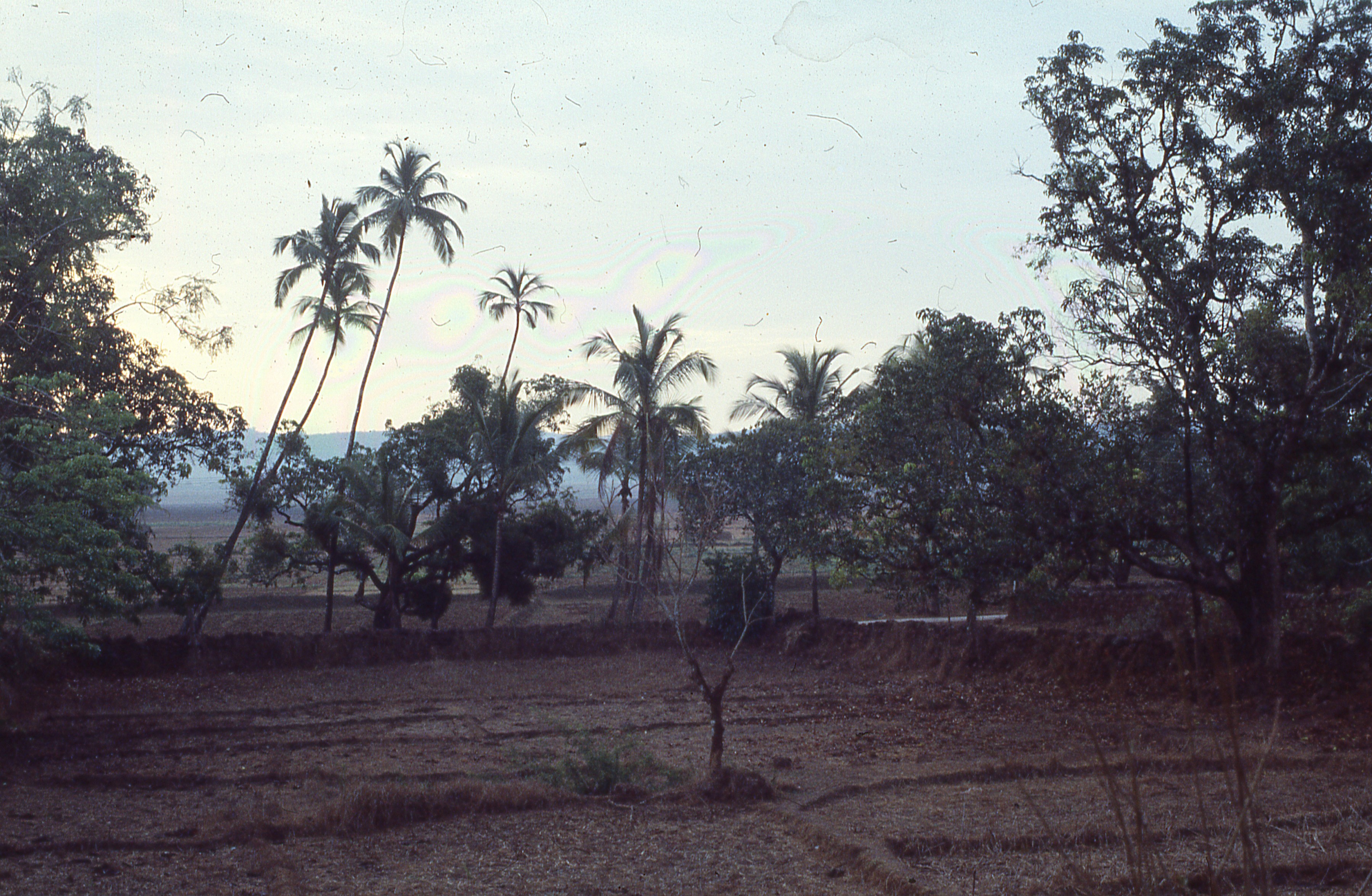
Ribeiro’s photograph of the fields of Goa (taken in 1968)
Lancelot Ribeiro’s early paintings, dating from 1958, were expressionistic oil townscapes. It was in a 1972 lecture delivered for the Commonwealth Institute, the artist described his aesthetic and early influences:
‘My first influences if I can recall them in the order they happened, were the Churches and Statuary of the Catholic Church in Goa along with the symbolic ritual that went with it ... The other and perhaps the strongest influence were the paintings of my brother 10 years senior.’
Ribeiro on his artistic practice, 1972
Bombay was also the city of Ribeiro’s boyhood. The family home in Hira Building overlooked Crawford Market on one side and the Police Commissioner’s Office on the other. It too provided the backdrop to Ribeiro’s formative years, where Souza’s circle of friends - artists, poets and writers – were welcomed into the family home. Family letters reveal that the city of Ribeiro’s childhood was a cosmopolitan city that was buzzing, culturally. It was still, however, an India under the British Empire.
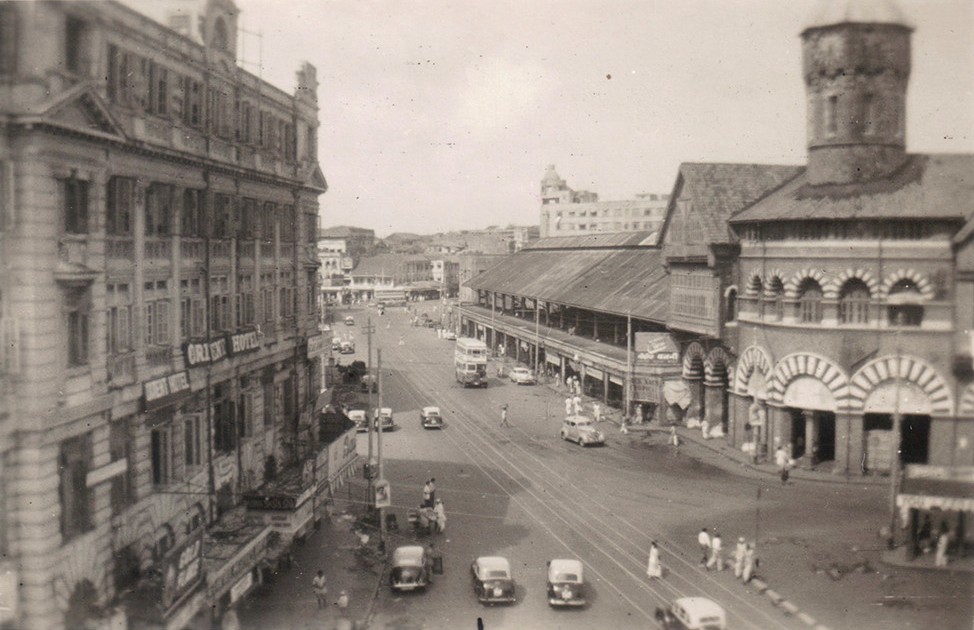
Bombay’s Crawford Market viewed from the family home in the 1940s
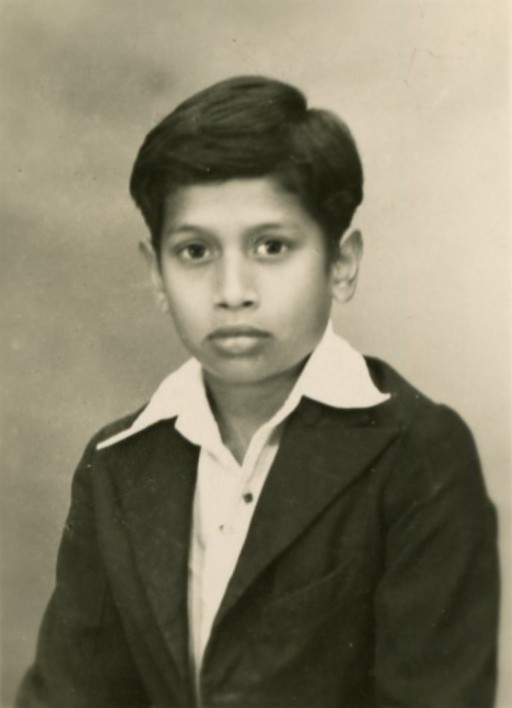 | Ribeiro’s schooling cemented a strong Catholic education. From 1939 to 1942, Ribeiro attended St Xavier’s School for boys in Bombay run by the Jesuit priests. It was in 1942, his mother transferred him to St Mary’s (Senior Cambridge School) – a boarding school in Mount Abu (Rajputana) where she believed he would thrive. Having to endure the harsh and sadistic regime of the Irish Christian Brothers, he would later write: “From too early an age I was troubled by ‘Father why hast thou forsaken me?’ Never could figure it out…” |
Ribeiro’s school photograph, c. 1945 | |
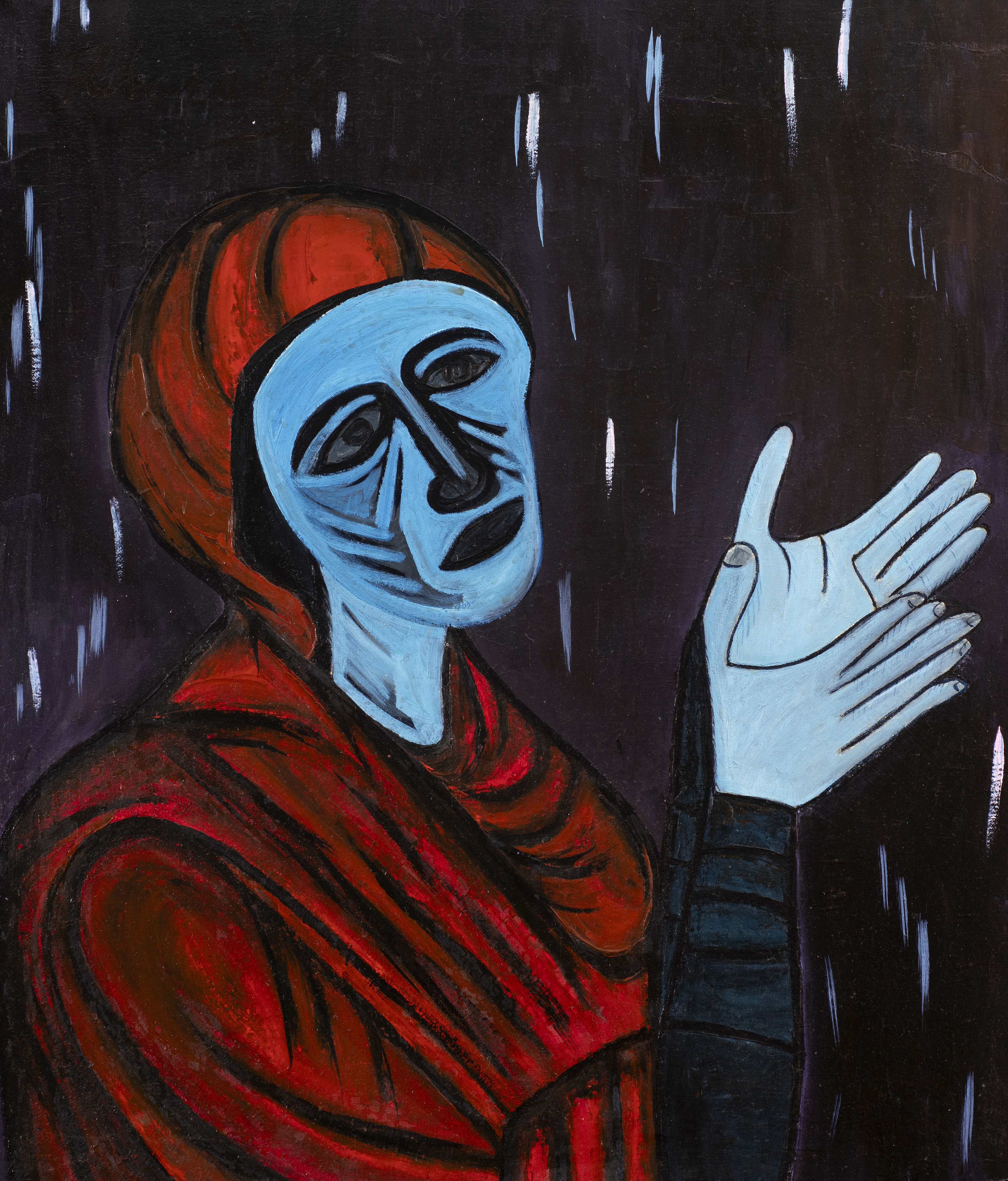 | These formative experiences and troubled childhood, he explained, cultivated his evolution into an ‘image maker’ as a painter. His icon-like heads – often haunting portrayals of Christ with stigmata or Christ on the cross, stricken monks or anguished saints – were also drawn from the Christian tradition and referenced his Goan heritage. |
Untitled (Blue Anguished Figure), 1964 |
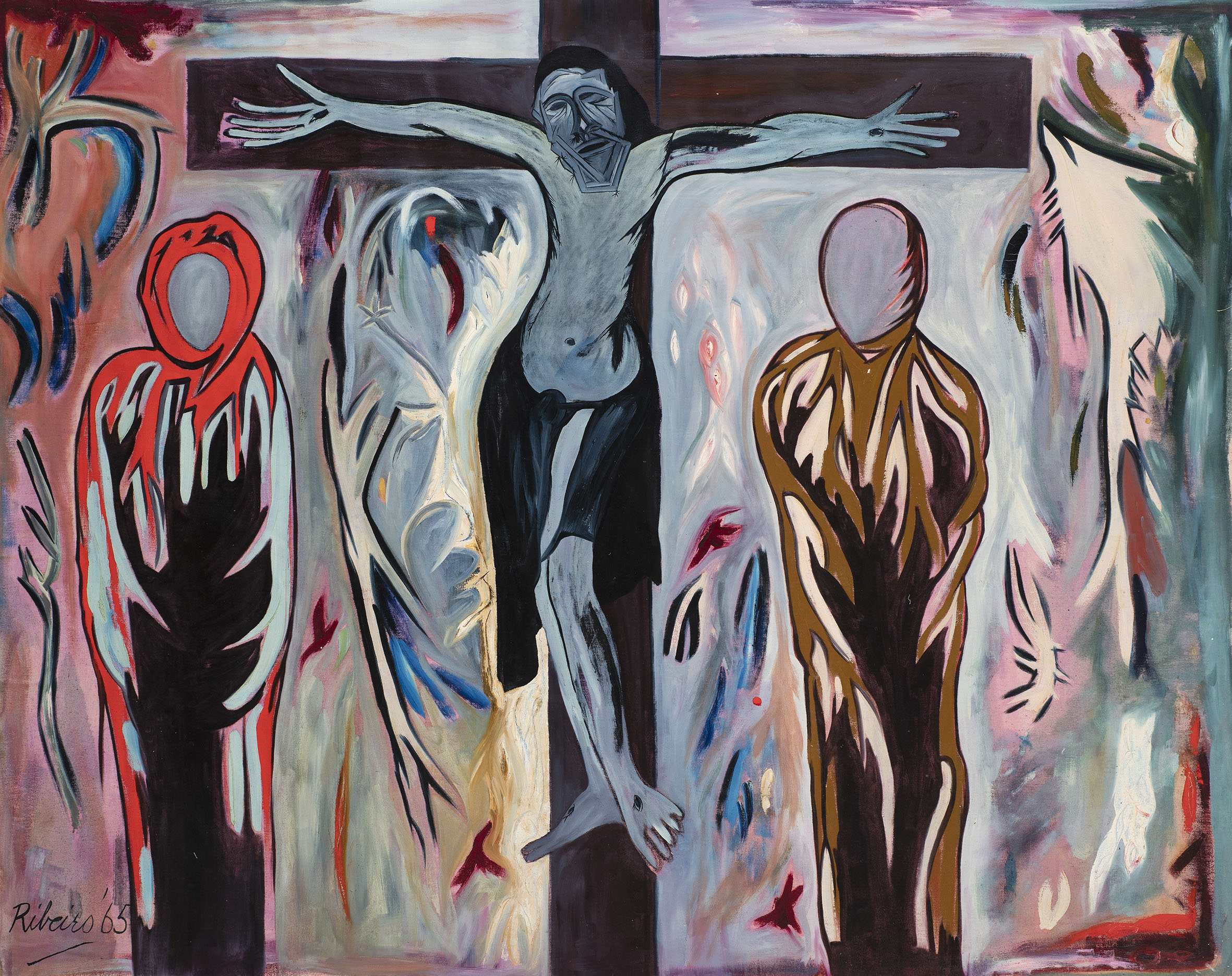
Untitled (Crucifixion), 1965
In 1946, Ribeiro returned to Bombay and St Xavier’s High School. During his early teenage years, the Indian subcontinent was undergoing significant political turmoil and change. On 15 August 1947, India secured its Independence from Britain but the sectarian divisions left behind by British colonial rule and the horrors of Partition slicing through a country he loved would infuse much of his future writing.
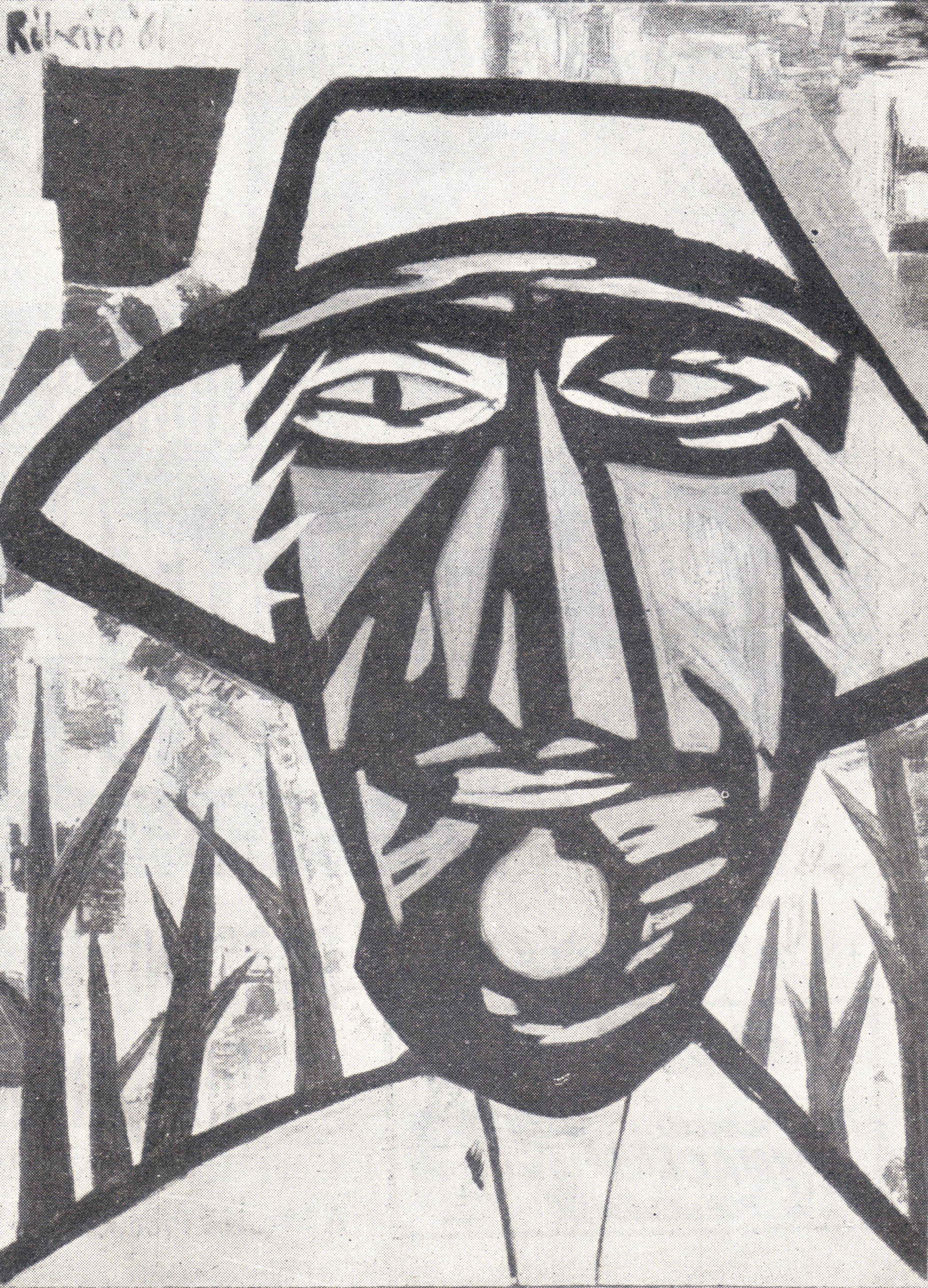
The Colonialist, 1961
In July 1950, Ribeiro left St Xavier’s High School – two months before he would be sent to Britain - one year after his brother had left, to study accountancy.