
Experimentation fever takes hold(1962-1969)
Shortly after his permanent move to Britain in June 1962, Ribeiro had consignments and exhibitions lined up with several West End galleries. This included the Piccadilly Gallery, which brought in early sales, and John Whibley Gallery’s Group of Six exhibition.
By the autumn, he was in receipt of a grant from the Congress for Cultural Freedom in Paris [Congrès pour la Liberté de la Culture (or CCF)] which helped him buy art materials and offered hopes of an exhibition at the Galerie Lambert in Paris:
My activities here though small, are very encouraging. I have paintings spread out at four Galleries in London. I recently had a group show at the Crane Kalman Gallery. I am due to have a one man exhibition at a new Gallery in Hampstead. This should be around May. The Piccadilly Gallery has shown interest in my work and have even managed to sell three paintings. Although money and painting have little to do with each other, this sale has come at a very useful time
Ribeiro to the Congress for Cultural Freedom, 1963
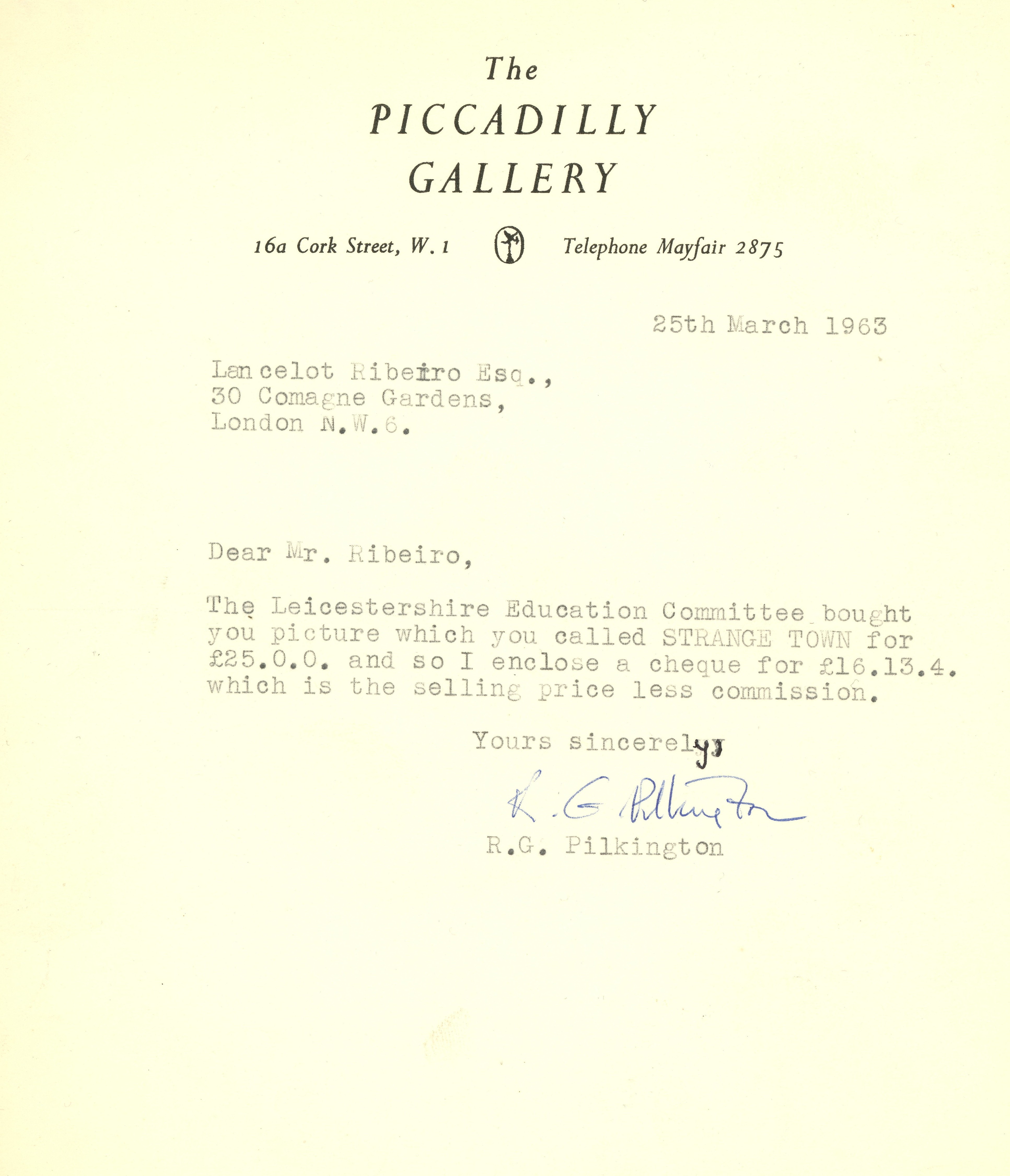 The Piccadilly Gallery’s sales receipt. | 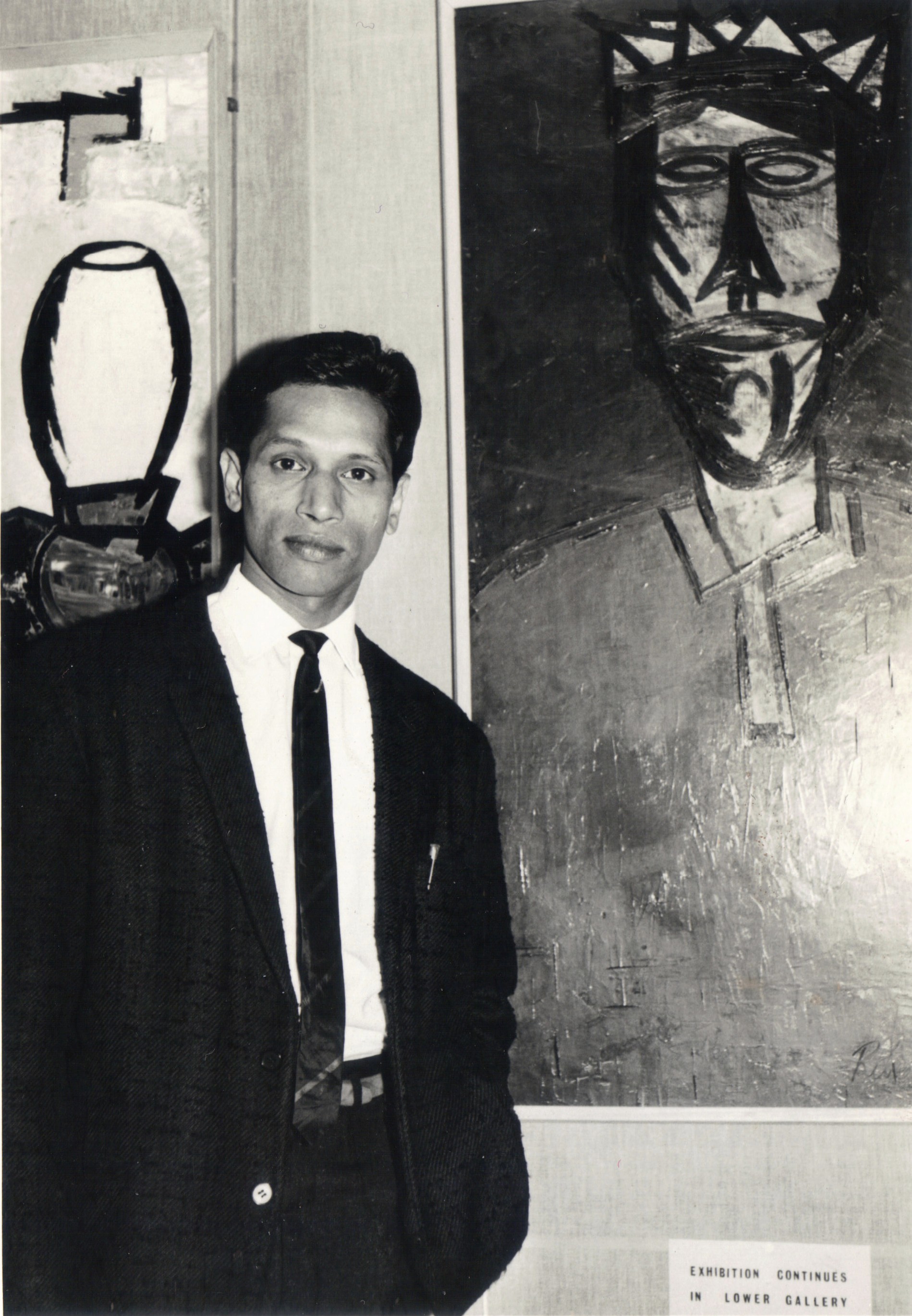 Ribeiro at the Group of Six exhibition at the John Whibley Gallery, 1964 |
Parallel to these developments, Ribeiro had also joined forces with three other Indian artists to form the Indian Painters Collective in 1963. The IPC would grow in size and spearhead a movement that would last for well over 25 years (Artist Collectives).
Ribeiro soon sought to move away from the compositional style of his early work, explaining:
In early 65 there was a positive move to break from these first influences and work toward a more unified and organic style as opposed to the structural and linear aspect…
Ribeiro, 1972 Commonwealth Institute Lecture
His long-time friend and patron, Patrick Boylan (former Director of Museums and Art Galleries, Leicestershire), revealed that as a ‘restless young painter’, he had seen potential in polyvinyl acetate (PVA) - a product which mainly catered for industrial uses. With technical guidance and samples from several industrial manufacturers of PVA, Ribeiro began pigmenting these early ‘PVAs’ with high dispersal synthetic dyes that he had sourced from Geigy. His experiments unfolded on hardboard, wood, plywood, canvas and paper.
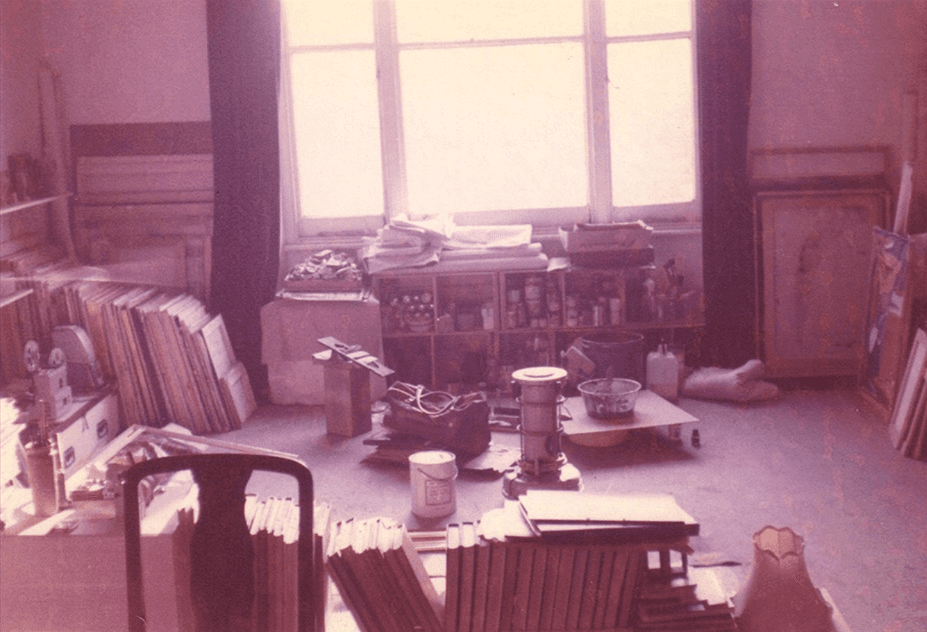
Ribeiro’s studio, 41 Belsize Park Gardens, c.1968
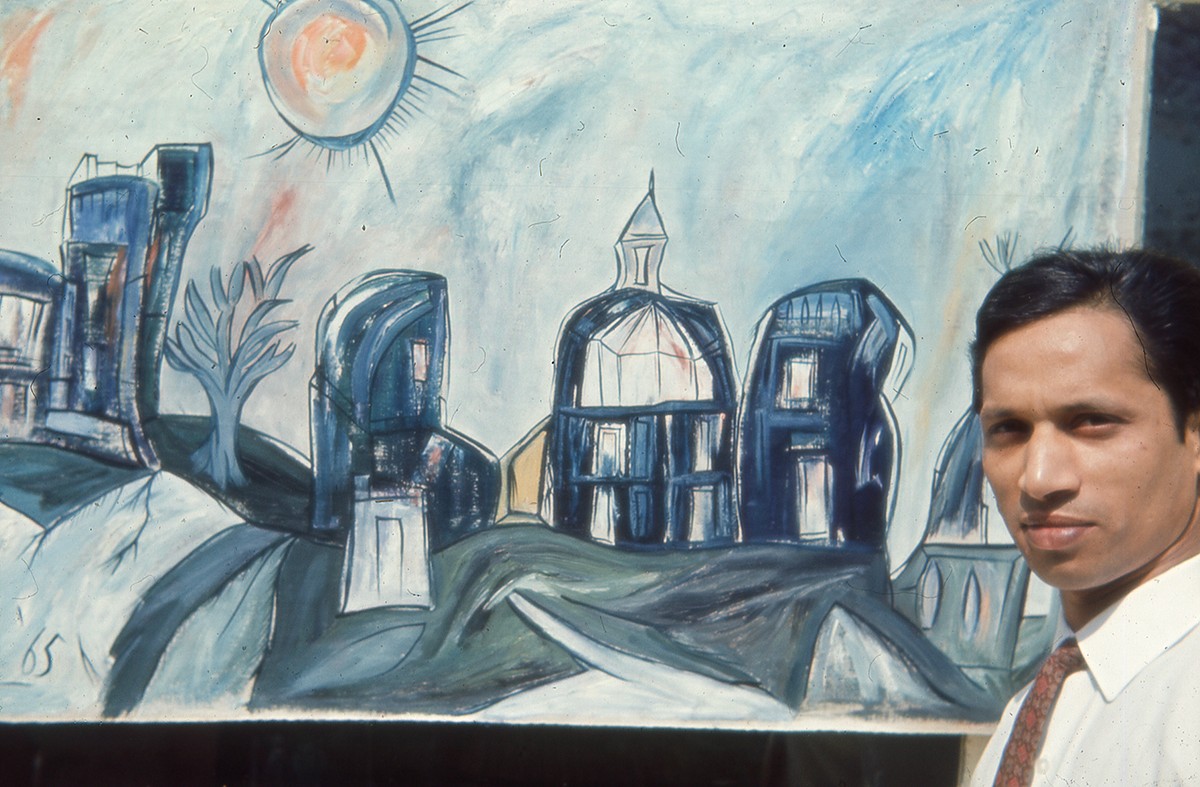 | The results of his efforts sparked a radical transformation in style. His townscapes still bore familiar basilicas and churches, lit by his signature pulsating sun or moon. Such scenes continued to reference his Goan roots, however, they had been reconstructed to evoke a sense of movement, dissolving into lyrical scenes. |
Ribeiro with a 1965 oil and PVA townscape | |
Successive and deliberate transformations became evident in Ribeiro’s ‘Heads’ too. PVA was – he said - the dominant medium; referring to the new PVA and synthetic dye colorations he had concocted in his studio. This paved the way for a proliferation of heads collectively grouped under the Psychedelic Man Series such as The Warlord.
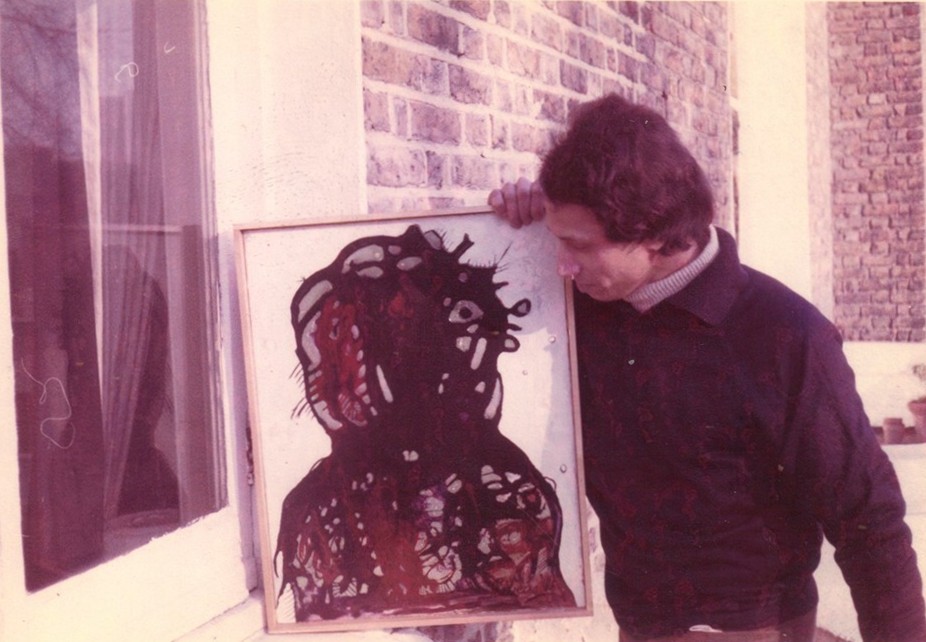 Ribeiro with his favourite work The Warlord, c.1968 | Out of his studio, at the same time, also came a wide range of other work. This included a series of surreal compositions which he categorized as ‘line and wash’ drawings. These were teasing scenes, usually with an altered perspective depicting figures in everyday life. |
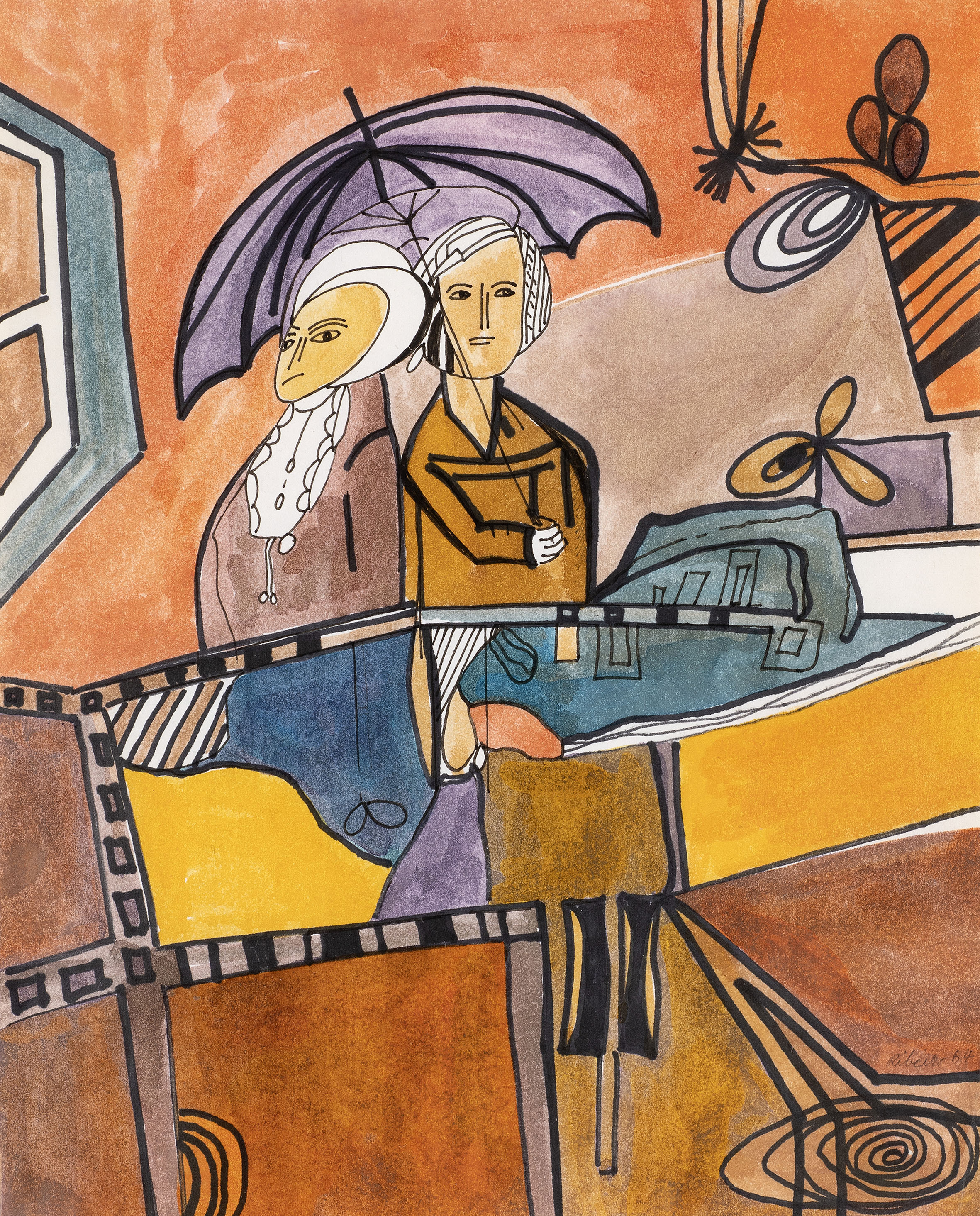 Ribeiro’s ‘Line and Wash’ Untitled (Two Ladies with an Umbrella), 1964 | 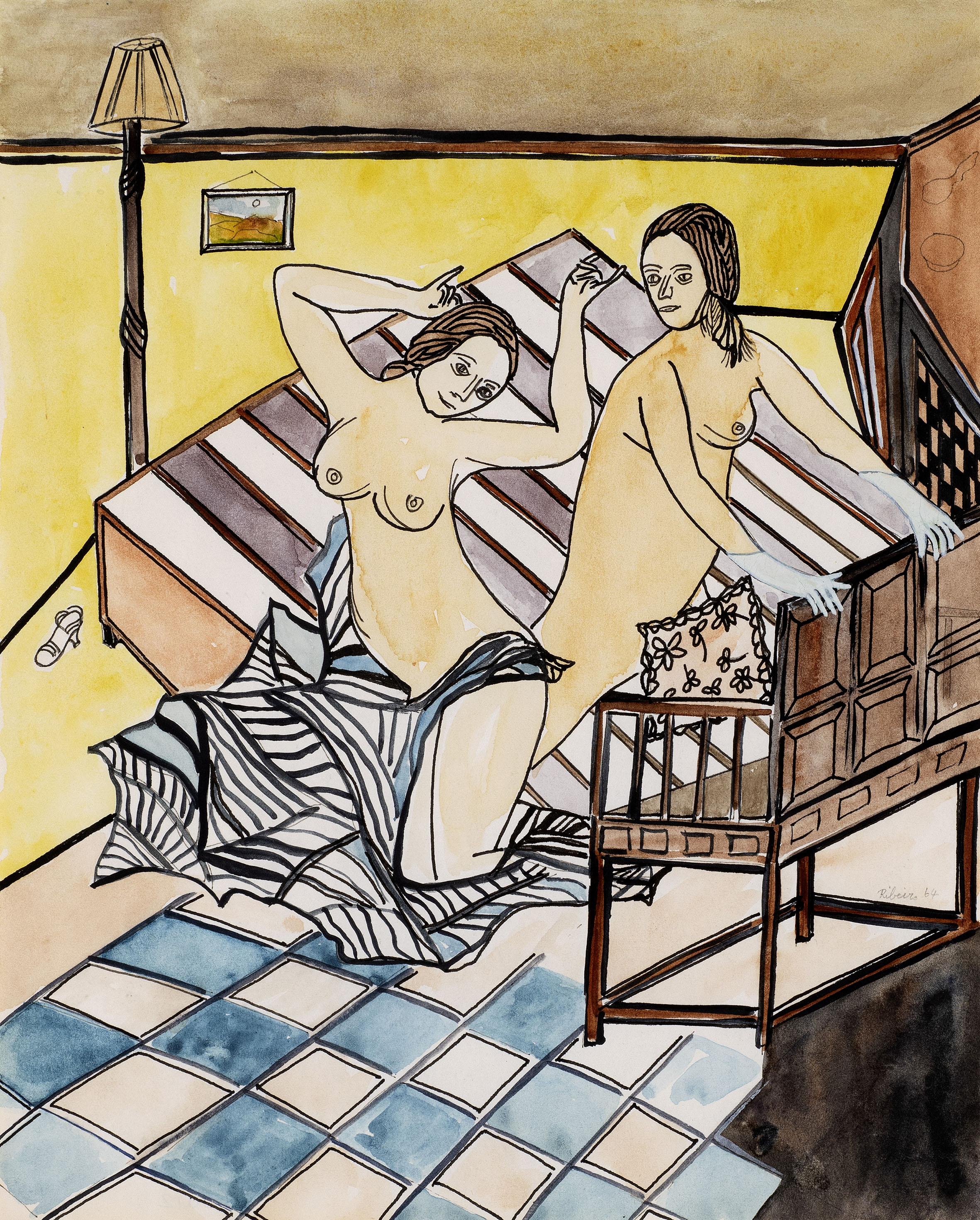 Untitled (Two Nudes Bathing), 1964 | 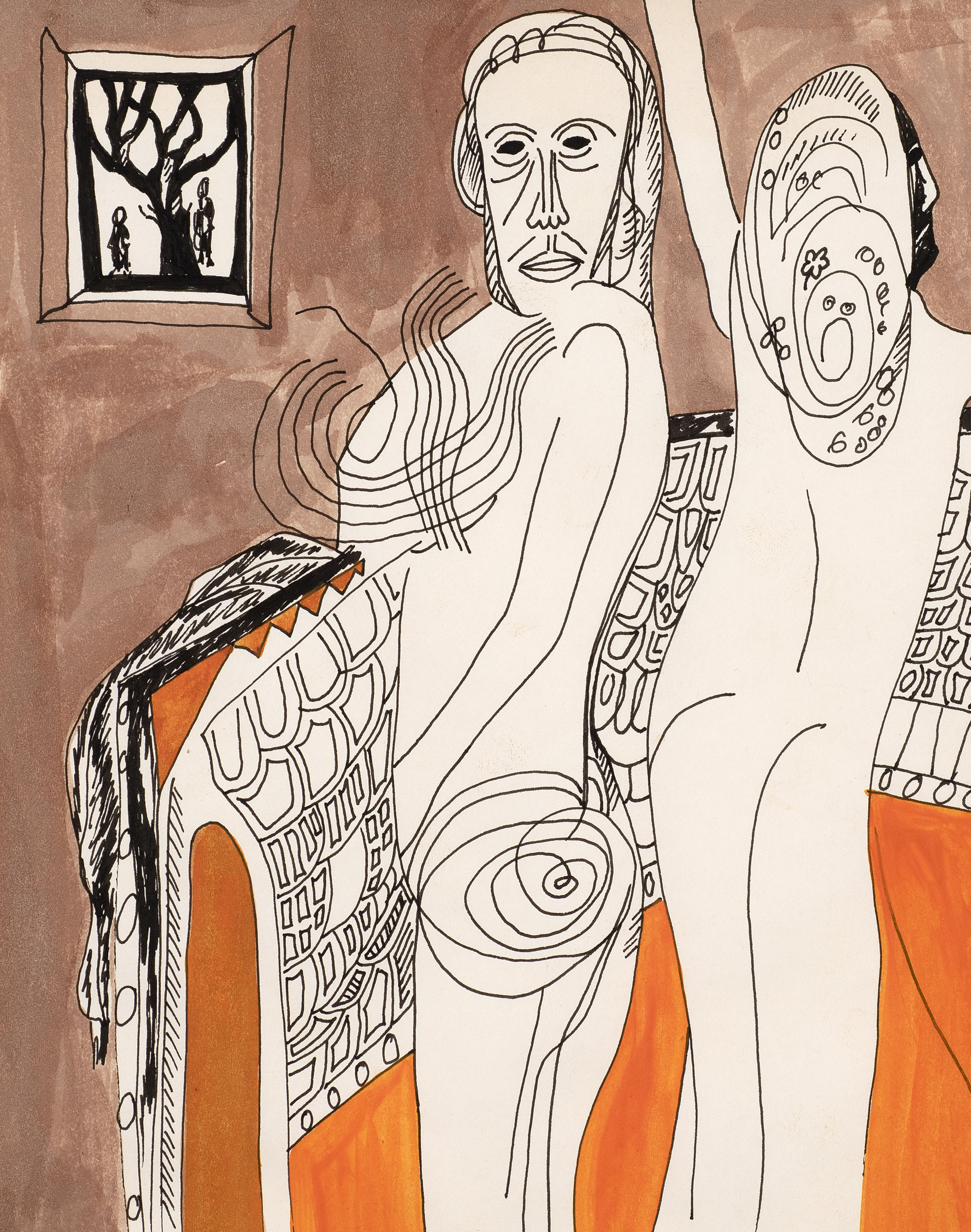 Anticipation, 1965. |
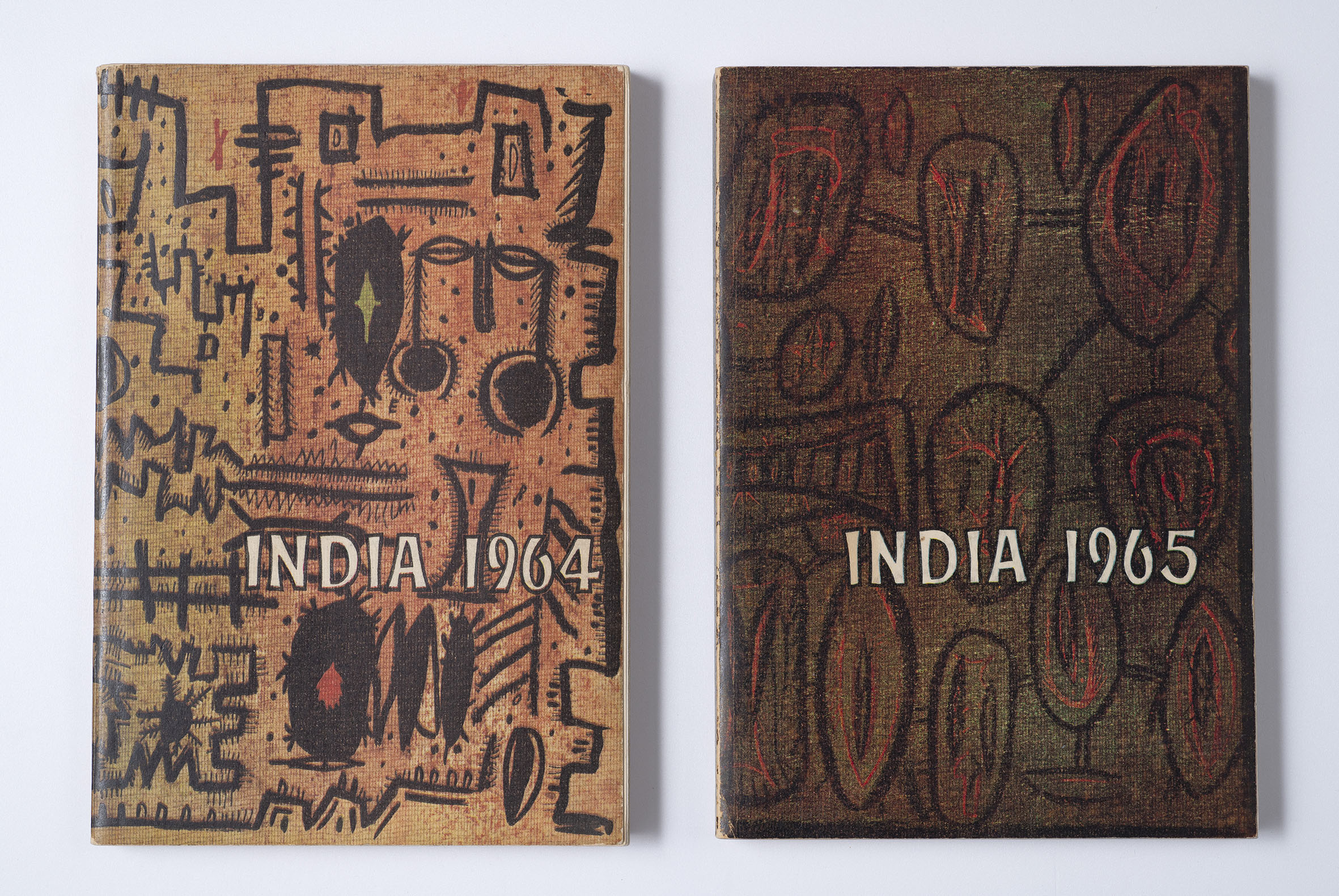 | Wood sculptures also emerged where the dyed PVA had been used to enhance the wood’s natural grain. A new stylistic language, reminiscent of the hieroglyphics of early Indian art, appeared on ceramics and graphic art compositions, two of which were commissioned by India’s former Foreign Secretary, Salman Haidar for the India Annual. |
Ribeiro’s 1964 and 1965 covers for the India Annual | |
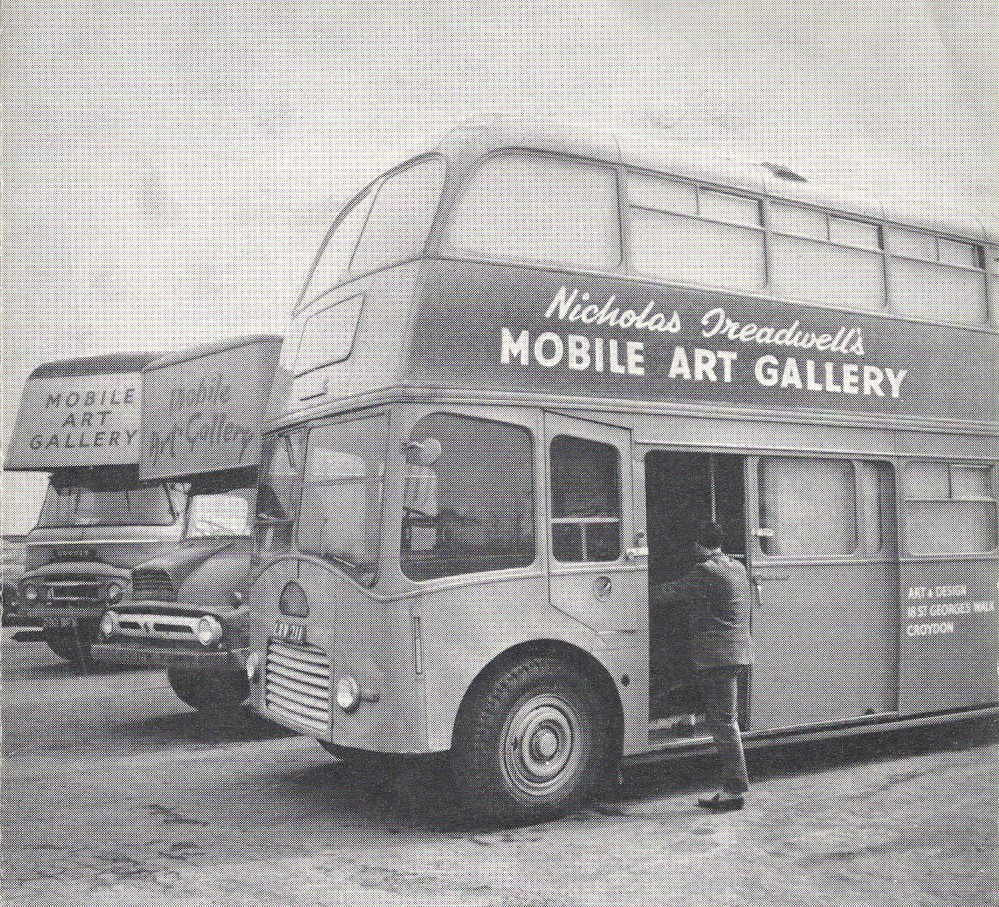 | From 1964 onwards, Ribeiro was exhibiting across London and in Nicholas Treadwell’s mobile fleet of art galleries which took art into the suburbs to potential customers who had walls, Treadwell would say, “waiting to be filled.” In 1966, Ribeiro’s work, alongside that of his brother Souza and other artists, featured in The Arts of India exhibition at the Towner Art Gallery in Eastbourne. This promised to portray some ‘400 years’ of early Indian art, mainly on loan from the V&A against a ‘contemporary’ section. |
Ribeiro’s 1964 and 1965 covers for the India Annual | |
Stylistically as the decade was drawing to a close, having accomplished the desired effect he had wanted in his faceless series, Ribeiro reflected:
“I could go on endlessly to produce painting after painting – interesting perhaps – but somewhat meaningless and self-plagiarizing”
Ribeiro, 1972 Commonwealth Institute lecture
 | It was in 1968 that Ribeiro said:
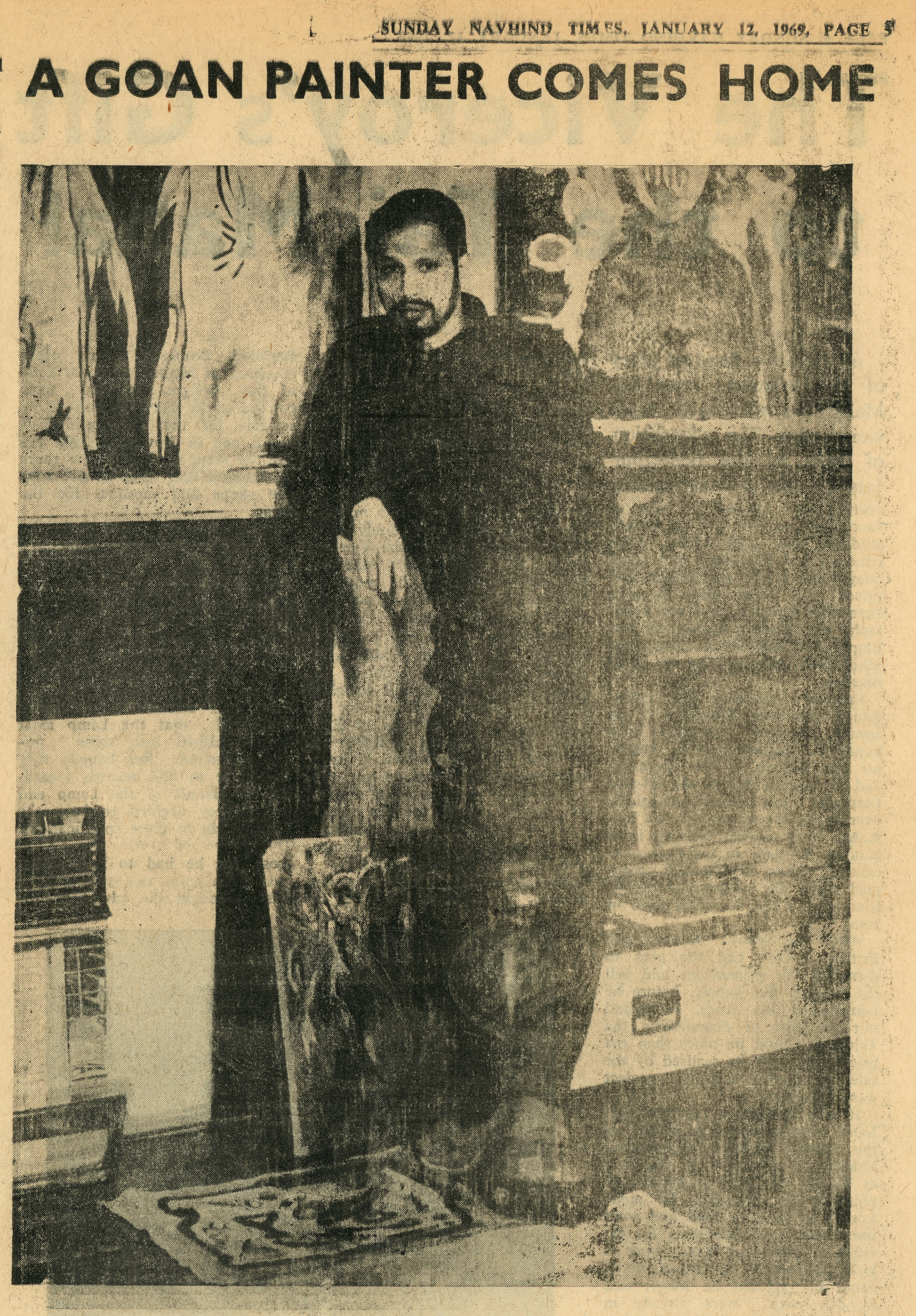
Several of his most haunting politically-charged scenes such as Frolic on a Nuclear Playground were done before he left for India. He would exhibit several heads from his Psychedelic Man Series in Goa’s Institute Menezes Braganza in 1969. Although the exhibition was a fleeting three-days, it was widely reviewed and picked up by Art in America: |
The Navhind Times | |
...if you have further time to spare in London, and you really want to delve into its present art, visit some studios. This becomes necessary because much of the best work now being done in these parts is not at the galleries ... take the case of Lancelot Ribeiro, a gentle and retiring man who stays away from the art whirl to compose the most horrendous faceless icons in his Belsize Park studio. The mighty masochism of Ribeiro's Stricken Monk With Cat-O'-Nine-Tails turned my mind away to the war in Vietnam. However, Ribeiro showed the piece in his native Goa recently, and there it seemed a reflection of India's lacerated land.
Art in America, 1969
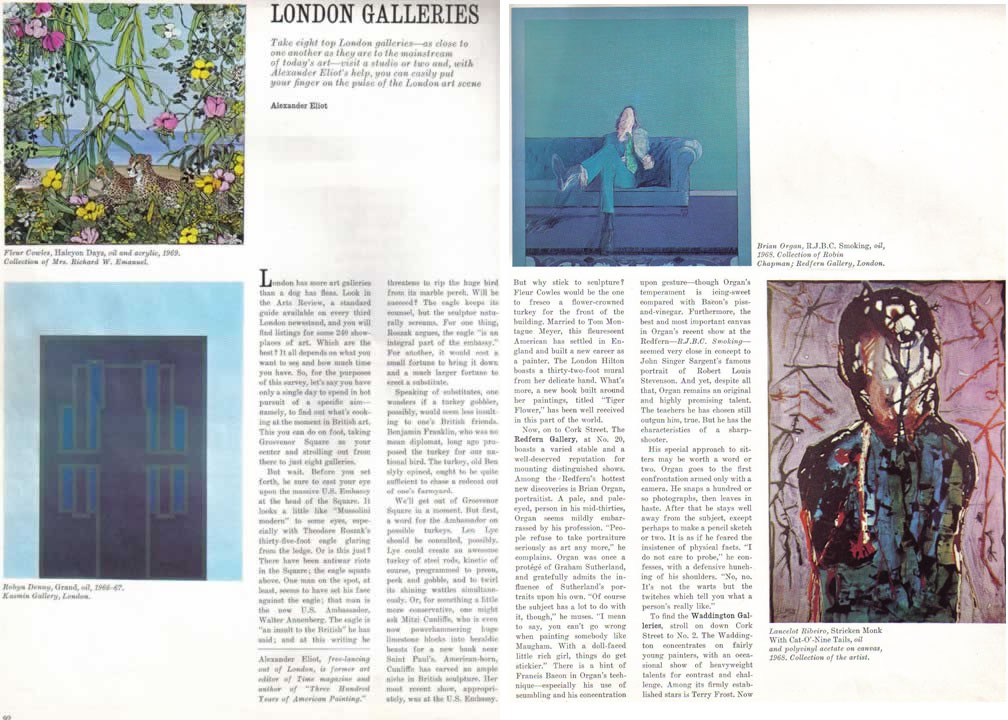
Review of Ribeiro’s studio in Art in America, 1969
Ribeiro’s work would change course again as he began a set of Tantric paintings that would take him into the next decade. These paintings he felt marked his return to his Indian roots (American Exposure).