
The Poet-Painter(1955-1962)
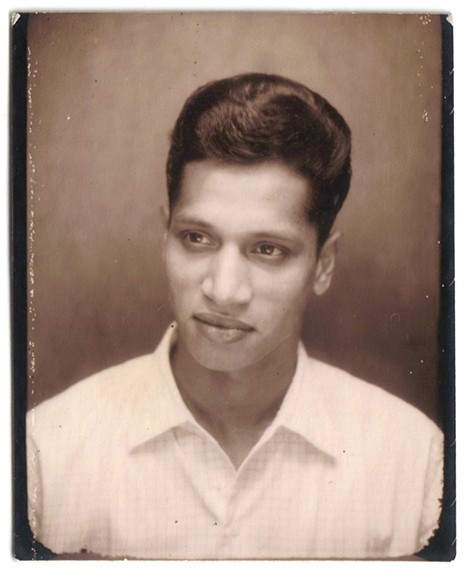
Now out of the Royal Air Force, Ribeiro sailed back to Bombay on the P&O’s SS CHUSAN in March 1955. He was in his early twenties and had begun working for the Life Insurance Corporation of India. He had also started to write and paint and had hopes of being a published poet one day.
Painting, he always told people, happened accidentally when he was invited out hunting by a friend:
“At the hardware store I saw some paint colours. I was amazed. Instead of buying ammunition I bought a load of these colours.”
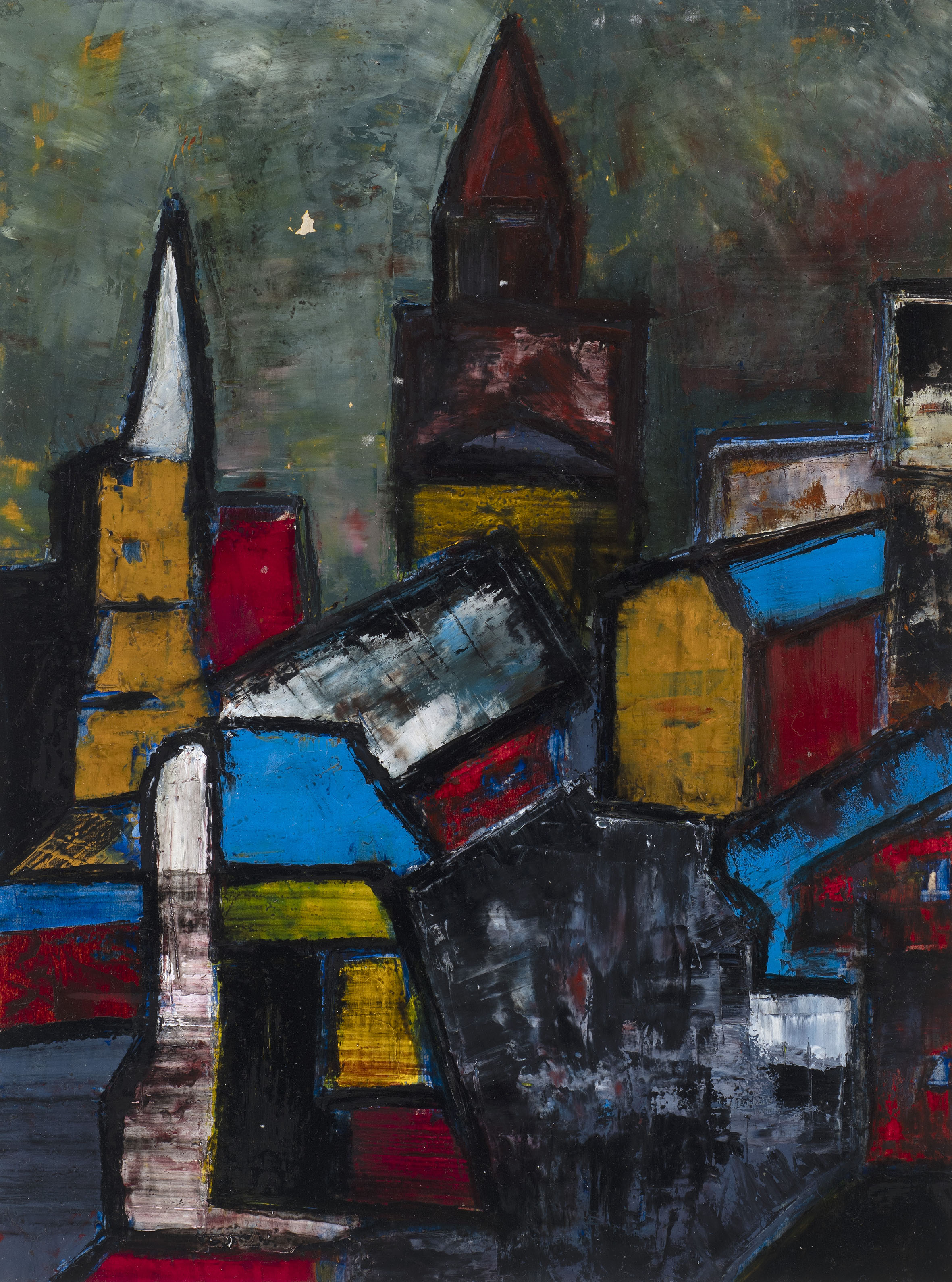 Untitled (Townscape), 1958 | His first surviving paintings, produced from 1958, were primarily expressionistic oil townscapes on paper. These architectonic pieces, he explained, had a deliberate ‘structural and linear aspect’ and were darkly-coloured with flashes of colour, imbued with the imprint of his Goan heritage. His icon-like heads – which increasingly depicted Christ, Cardinals, stricken monks or anguished Saints - were also drawn from the Christian tradition. In a 1972 lecture, he surmised these early influences:
|
Ribeiro, 1972 Commonwealth Institute lecture
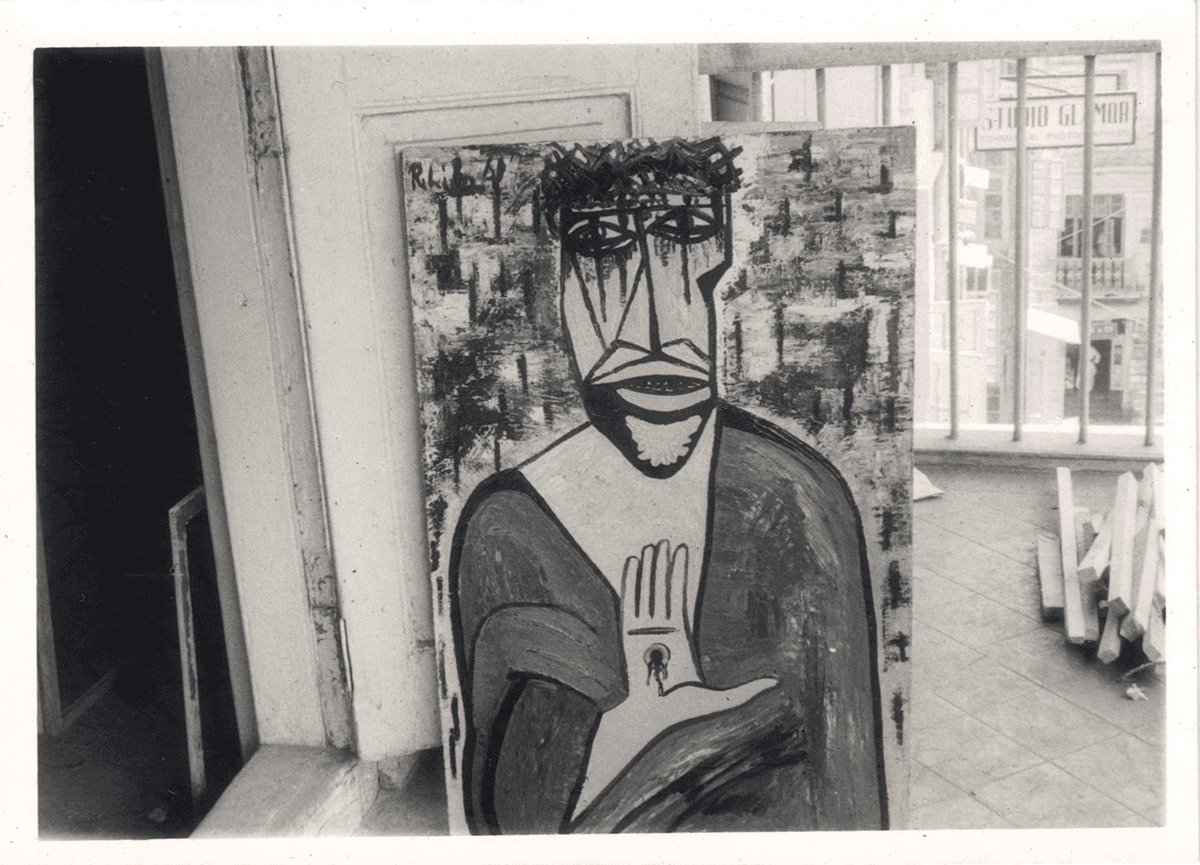
Photograph of 1961 Untitled (Christ), Hira Building
Ribeiro's boyhood, which had been spent in a cosmopolitan and vibrant Bombay, had undoubtedly nurtured his artistic temperament. The family home too, in Hira Building, had welcomed in artists, writers and poets and Ribeiro, from young, had witnessed his brother's artistic talent emerge.
In a 1998 newspaper interview, Ribeiro described the role the renowned art critic for the Times of India - Rudi von Leyden – would play in getting him his first exhibition:
‘Rudi eventually came to my little room, spent over an hour looking at my paintings and said that I must have a show. I was told to see a curator at a gallery at the Taj Hotel, Bombay. I took three paintings and by the time I got back to my room I got an excited message saying that my paintings had been sold within a space of half-an-hour...’
The Asian Age, 17 October 1998
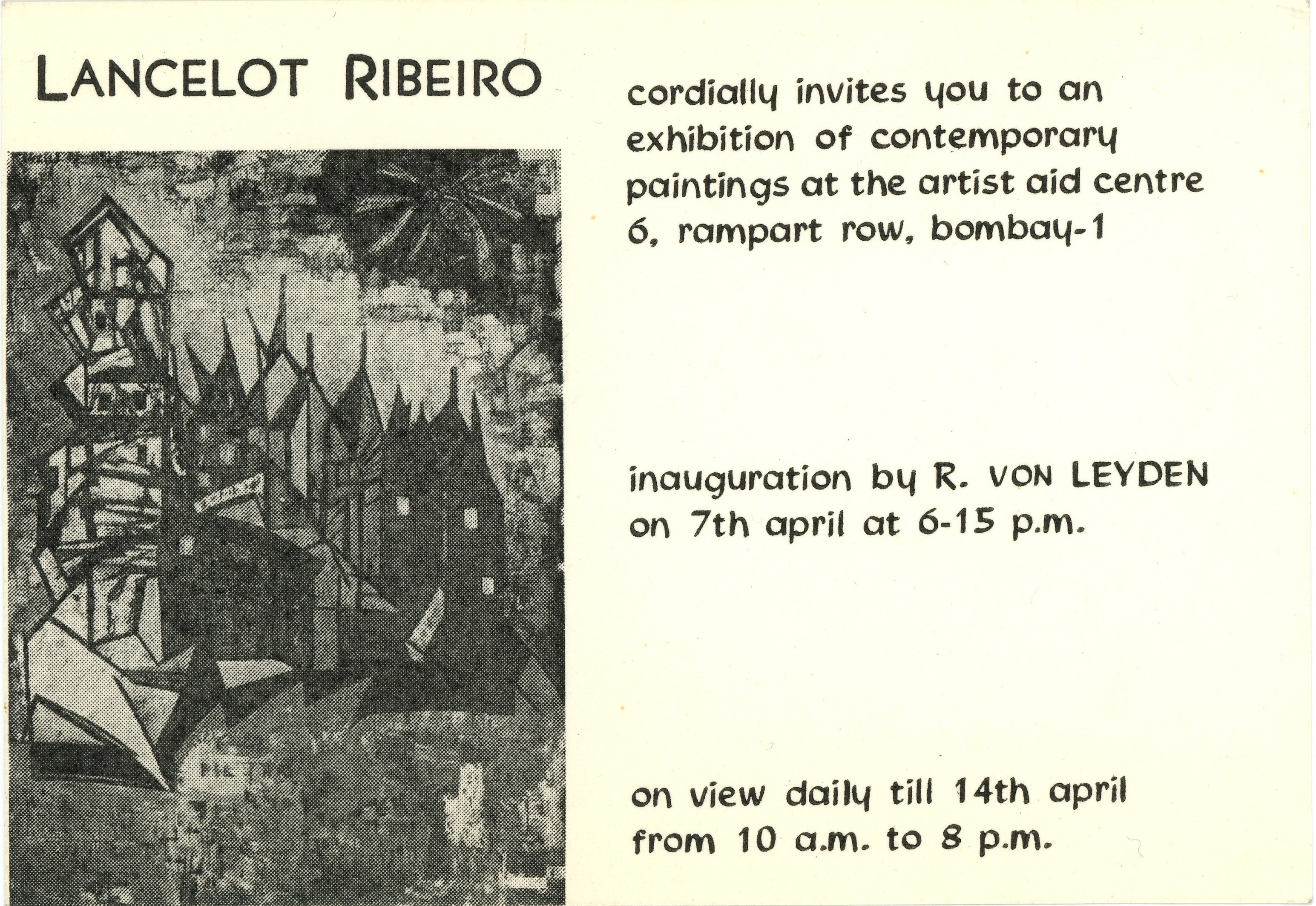 Bombay Artist Aid Centre invitation, 1961 | It was his 1961 solo exhibition, opened by von Leyden, at the Bombay's Artist Aid Centre which launched his career as an artist. It won him an early patron in the form of Homi Bhabha, the nuclear physicist and founding director of Tata Institute of Fundamental Research and Trombay Atomic Energy Establishment. |
It was his 1961 solo exhibition, opened by von Leyden, at the Bombay's Artist Aid Centre which launched his career as an artist.
It won him an early patron in the form of Homi Bhabha, the nuclear physicist and founding director of Tata Institute of Fundamental Research and Trombay Atomic Energy Establishment.
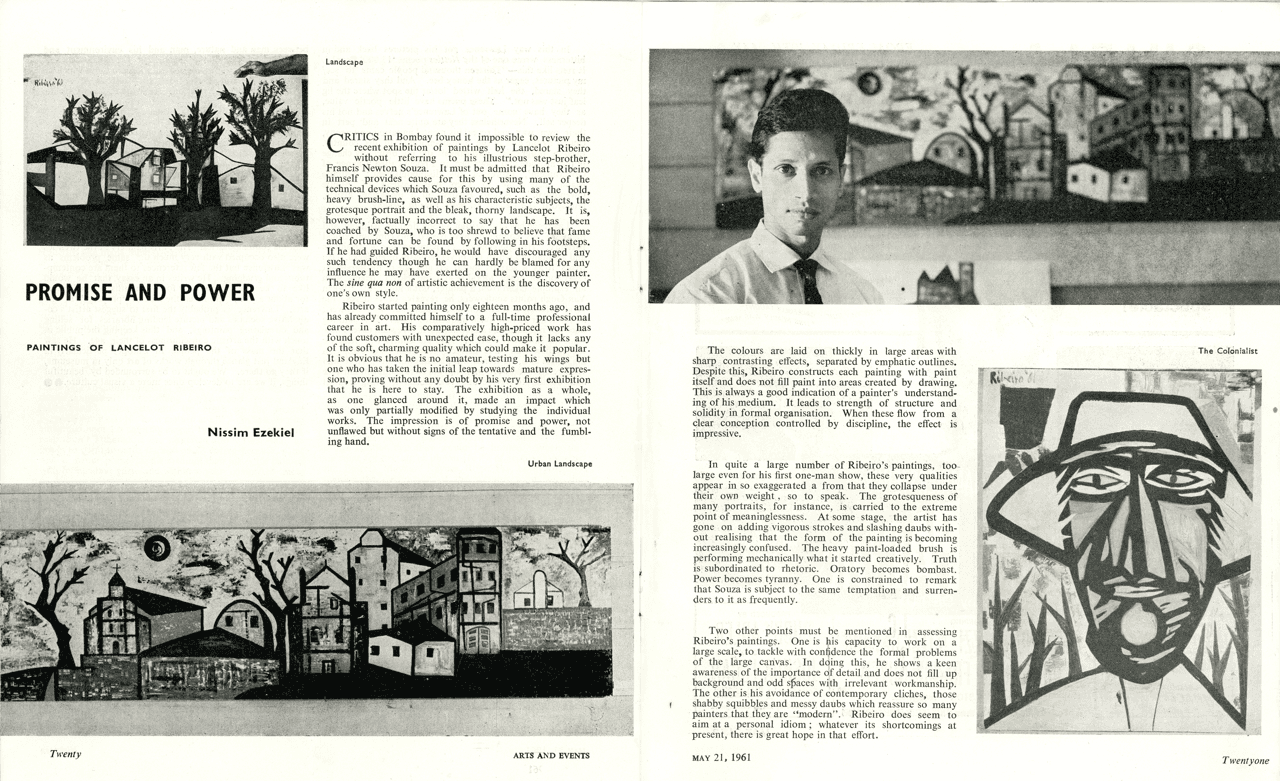
Arts and Events review by Nissim Ezekiel of Ribeiro’s debut exhibition, 1961
Homi Bhabha secured him a commission from Tata Industries to paint the 12-foot Urban Landscape mural for the Chairman and Chief Executive of Tata Iron and Steel, J.R.D. Tata and further collector interest would soon follow. This included the three Jewish émigrés who had helped develop India's nascent modern art scene; von Leyden along with Walter Langhammer and Emanuel Schlesinger, who had escaped Europe's Holocaust.
Ribeiro was still, however a poet at heart and also immersed himself in poetry.
 | Upon this dark stair within your mind With no rail to hold Set down your soul, With eye wide open. And you shall fall Unseeing. As I am falling. To no Kingdom And no Dying. Extract from Ribeiro’s ‘The Risen Voice’, c.1961 |
Ribeiro, c.1962 | |
It was in 1955 at a poetry reading organised by the British Council, he met lifelong friend and fellow poet, R. Parthasarathy:
‘In April 1962 … the American poets Allen Ginsberg, Gary Snyder, and Peter Orlovsky were in Bombay. After their reading on the terrace of theater director Ebrahim Alkazi’s house on Warden Road, Nissim Ezekiel, Adil Jussawalla, Lance, and I, together with the American poets, walked down to Ezekiel’s apartment at 67 Breach Candy. When we got there, Ginsberg wanted to know what Indian poets were like…’
‘Remembering Lance Ribeiro’, R. Parthasarathy, 2012
It was Ribeiro’s third exhibition at the Kunika Art Centre in Delhi where his prodigious output was noted:
‘… one of the showpieces recently visited by Mrs. Jacqueline Kennedy … with a blazing display of 23 oils which he produced within a three-month stay in the capital … Basilica which has been admired by many artists and art critics, including Hussain, as a crystallization of his experience in Old Goa, whose enclave of churches left a deep impression on him. The great liturgical activity there held him spellbound.’
‘Artist of Promise’, Dr J.P. Correa’s review of Ribeiro’s Kunika exhibition
Kunika’s Director, Richard Bartholomew, observed:
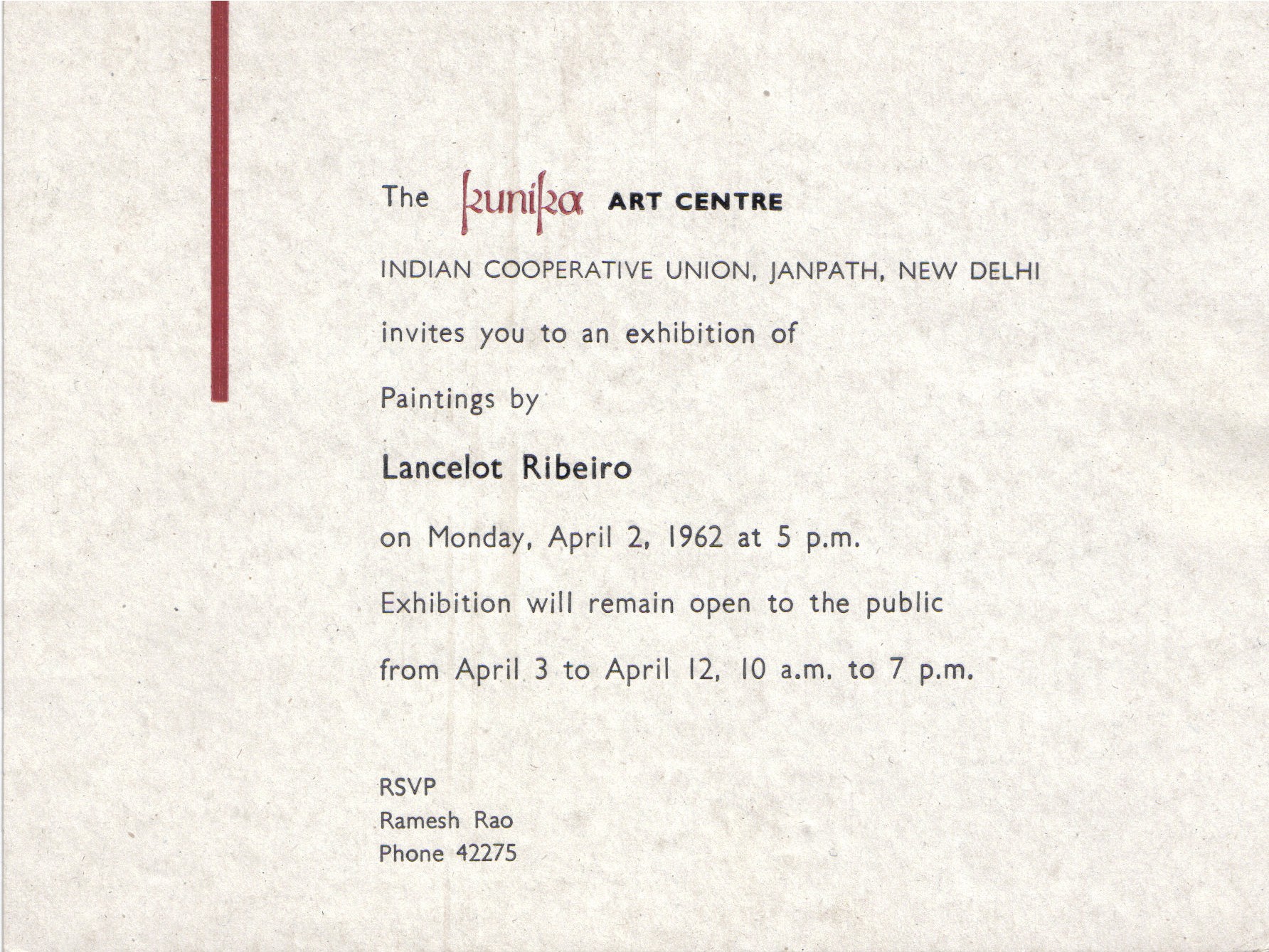 | 'The Church form is cardinal in Ribeiro’s sense of structure. This may be because Ribeiro is Goan and Christian … All these buildings - I have the feeling - are sanctuaries of silence. There is neither ghost nor God nor the breaker of bread… all this is a vivid prelude to something powerful to come hereafter.’ |
Invitation for Ribeiro’s 1962 Kunika exhibition
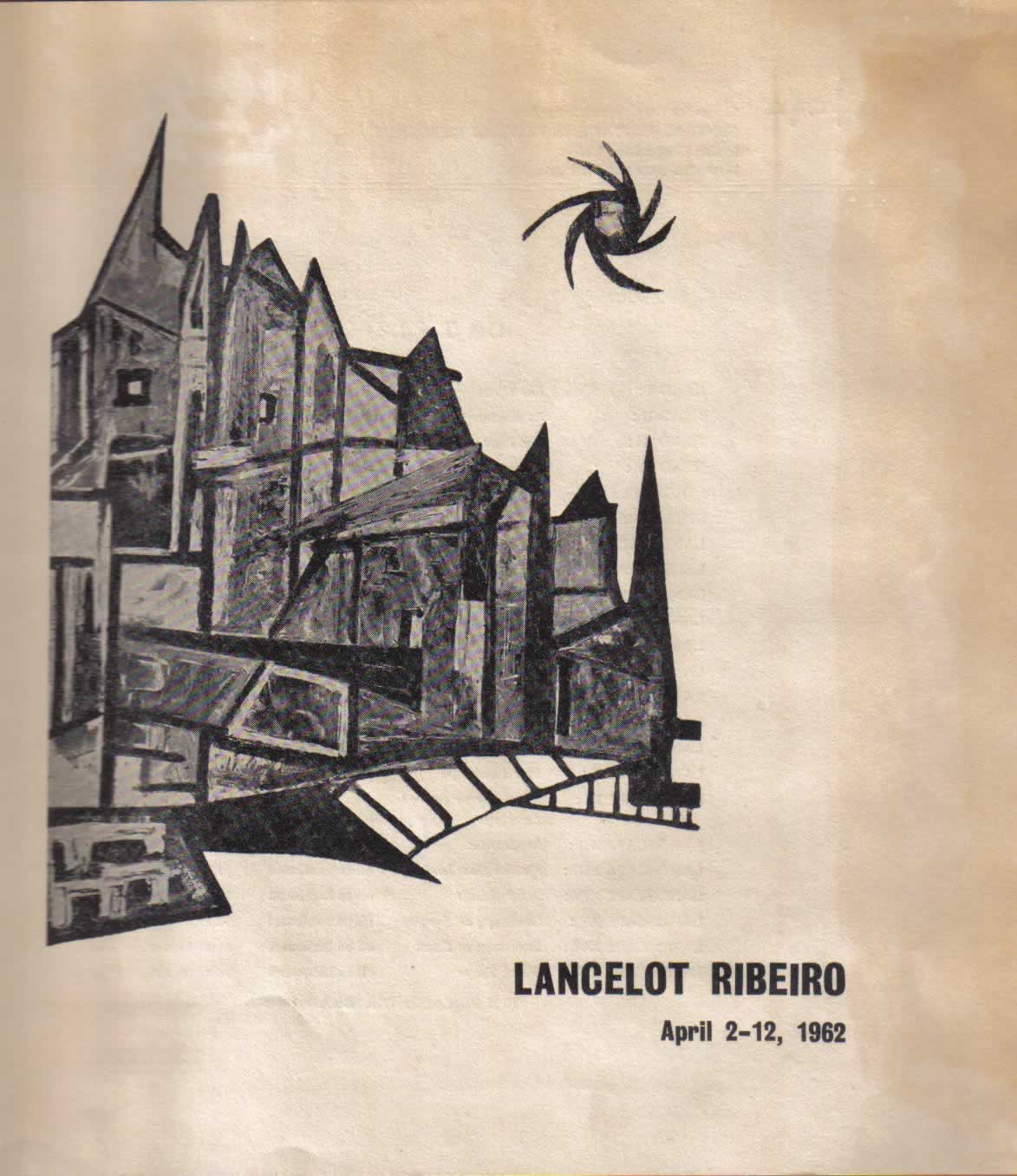 | 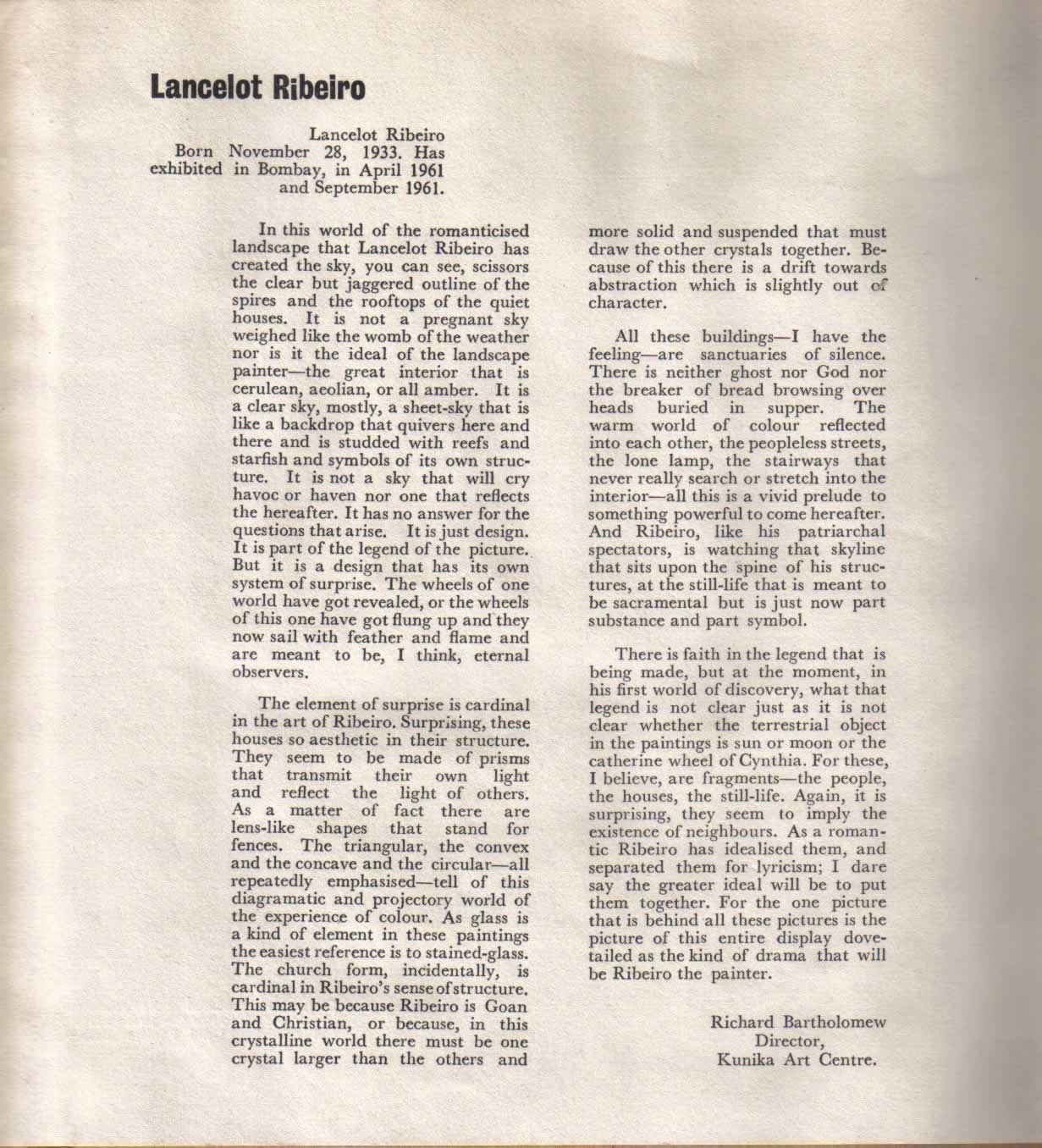 |
Kunika catalogue for Ribeiro’s 1962 exhibition with Richard Bartholomew’s foreword. | |
By the end of 1962, having had ten exhibitions, including Ten Indian Painters which toured cities across India, North America and Europe, he returned to London to settle permanently, his wife, Ana Rita, following six months later. It was around this time, he was also working unofficially, as Souza’s studio assistant in Belsize Park.
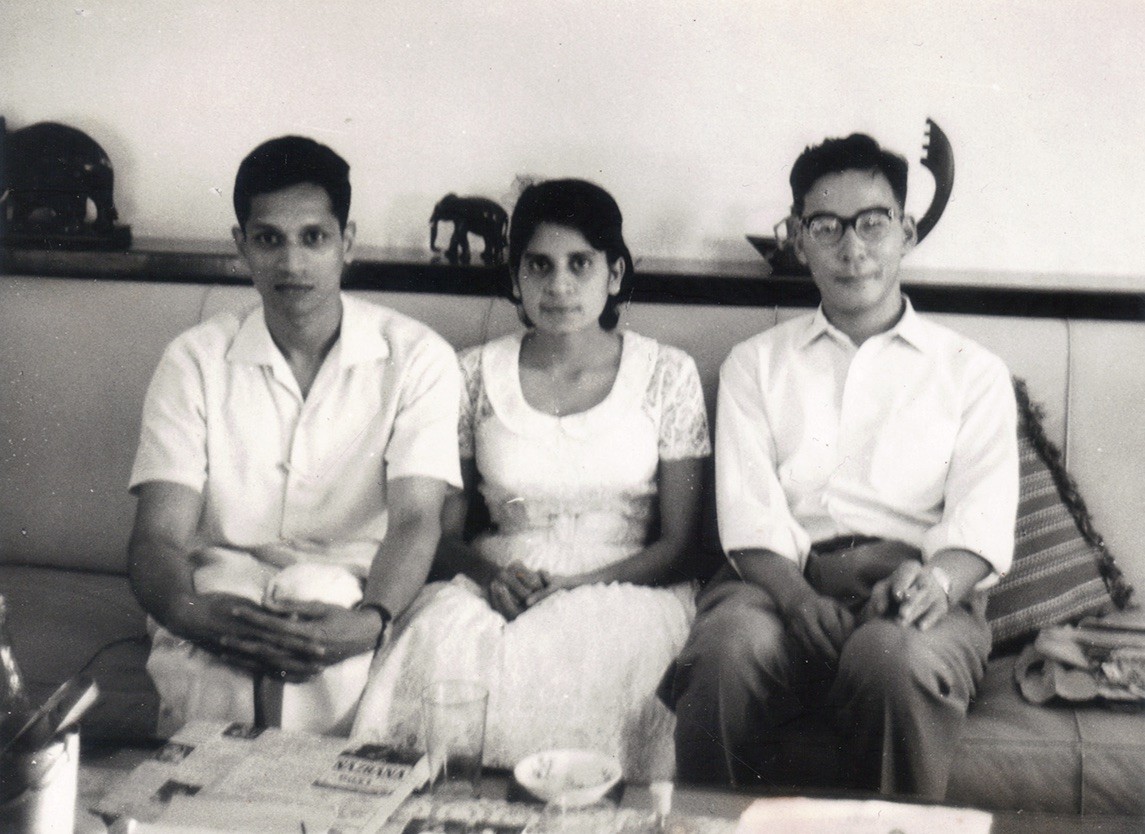
Ribeiro and his wife, Ana Rita with their friend Suzuki in Bombay, 1961